Published - 14th Aug 2026
Haworth Castings produces precision aluminium sand castings for electrification programmes across rail, bus, marine and automotive sectors, delivering the complex geometry, thermal management capability and quality assurance these applications demand.
Electrification programmes are underway across multiple transport sectors, driven by emissions targets and the commercial case for electric propulsion across rail, bus, marine and automotive platforms.
Haworth Castings is currently producing components for railway electrification retrofit programmes, supplying precision aluminium sand castings for platforms transitioning from diesel to electric power. Similar investment is driving e-mobility programmes across European rail and bus networks, as operators manage the transition to electric and hybrid powertrains within existing infrastructure. The European Commission’s Sustainable and Smart Mobility Strategy sets out the regulatory and investment framework shaping these decisions across EU member states.
For procurement managers and design engineers sourcing components for these platforms, the casting process matters. Motor housings, battery housings, electronics enclosures and drivetrain casings require complex geometry, thermal management capability and tight dimensional accuracy: requirements that aluminium sand casting is well placed to meet.
Haworth Castings produces aluminium sand cast components for electrification programmes across four principal sectors, each of which places distinct requirements on the components involved.
Rail
Electric and hybrid rail platforms require motor housings and ancillary drivetrain components that combine structural integrity with precise thermal management geometries. Retrofit programmes place particular demands on casting accuracy and dimensional consistency, where new components must integrate with existing vehicle architecture.
Bus and commercial vehicle
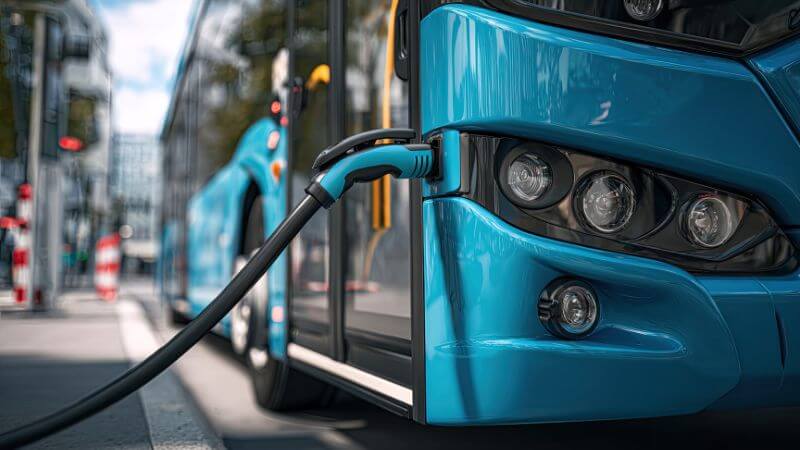
Electric bus platforms require motor housings, battery housings and electronics enclosures that are lightweight and capable of managing sustained heat loads in continuous operation. The production volumes typical of bus fleet programmes, and the duty cycles involved, favour a casting process with the flexibility to accommodate design variation across multiple vehicle variants.
Marine
Electric and hybrid marine propulsion systems place demanding requirements on motor housings in terms of corrosion resistance, structural performance and thermal management in harsh operating environments. The lower production volumes characteristic of marine programmes, combined with the geometric complexity of the components involved, make sand casting the natural process choice. The IMO’s 2023 revised GHG Strategy, which targets a minimum 20% reduction in shipping emissions by 2030 and net-zero by or around 2050, is accelerating investment in marine electrification and hybrid propulsion across commercial fleets worldwide.
Automotive electrification
Haworth Castings produces cast components for EV and hybrid automotive applications, with a focus on lower-volume, specialist programmes where sand casting provides the geometric complexity and material integrity that high-pressure die casting cannot match at these volumes.
Electrification programmes across rail, bus, marine and automotive platforms require a range of precision aluminium castings, each with distinct performance requirements:
All Haworth Castings sand cast components are produced as fully machined, tested and finished castings, ready for assembly. Full material certification, dimensional records and test documentation are provided as standard, supporting the quality and traceability requirements of regulated sectors.
For procurement managers and design engineers sourcing components for these platforms, the manufacturing process matters. Motor housings, battery housings, electronics enclosures and drivetrain casings require complex geometry, thermal management capability and tight dimensional accuracy: requirements that aluminium sand casting is well placed to meet.
The housing of an electric motor performs three simultaneous functions: structural containment, precise alignment of internal components, and thermal management. Electric motors generate heat through several mechanisms operating simultaneously: resistive losses in the copper windings, iron core losses through magnetic hysteresis, and mechanical friction at the bearings and bus bars. Managing heat effectively is therefore a functional requirement built into the housing design from the outset, with a direct bearing on motor performance and longevity.
Three cooling approaches are used in electric motor housings, each with distinct casting implications:
Air-cooled with external fins
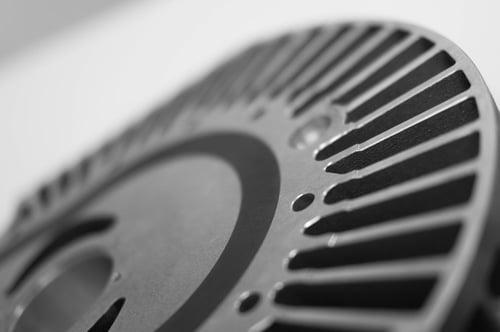
External fins cast into the housing surface increase the area available for heat dissipation, typically in conjunction with a forced air enclosure. Consistent fin geometry, accurate wall sections and a quality surface finish are all requirements directly influenced by the casting process – specifically the quality of the sand, binder system and moulding technique.
Water jacket cooling
Coolant channels cast into the housing wall require complex internal sand cores, accurately positioned and dimensionally stable throughout the casting process. The integrity of the cooling circuit depends on the quality and consistency of core manufacture. Haworth Castings produces cores using shell, cold box and hand-rammed techniques, with additional capability in 3D printed cores for the most complex channel geometries.
Oil cooling
Oil cooling circuits use similar internal channel geometry to water jacket systems and are common in integrated drivetrain assemblies where motor and gearbox share a cooling circuit. Internal surface finish within the channels is a consideration, as the oil also serves a lubrication function.
The motor housing as a thermal management component
In all three cooling approaches, the motor housing is an active thermal management component whose casting quality directly determines motor performance, longevity and reliability. The same applies to battery housings, where thermal management of the cell pack is critical to battery health and cycle life. Specifying the right casting process and supplier for these components is an engineering decision with programme-level consequences.
Lightweighting
Aluminium’s strength-to-weight ratio makes it the material of choice for electric drivetrain components. Reducing the weight of motor housings, battery housings and structural enclosures contributes directly to the range and efficiency of the electrified platform, which is a critical consideration across all four sectors. Sand casting achieves this without compromising the geometric complexity or structural integrity the application demands.
Complex internal geometry
Sand casting accommodates complex cored sections such as internal cooling channels, integrated fin arrays, manifold passages, at a scale and geometric freedom that high-pressure die casting cannot match. For components where the internal geometry is integral to thermal performance, this process capability is a determining factor in supplier selection.
Production volume fit
High-pressure die casting (HPDC) is the process that dominates high-volume automotive production: it is optimised for very large runs where the substantial tooling investment is amortised across millions of parts. Rail, bus, marine and specialist automotive electrification programmes operate at fundamentally different volumes, typically lower-volume series production or development programmes. Sand casting suits these volumes, with tooling costs proportionate to the quantities involved and the flexibility to accommodate design changes as programmes develop.
3D printed cores
Haworth Castings’ investment in 3D printed core technology supports development programmes requiring design iteration before committing to production tooling: particularly relevant for electrification programmes where housing designs are still being optimised.
UK manufacturing
UK manufacture reduces freight cost and lead time, simplifies communication during programme development, and provides the supply chain security that regulated rail, bus and marine programmes require
Haworth Castings offers a Design for Manufacture (DfM) service that engages engineering teams at the component design stage, before tooling is committed. Working with customer CAD data, the team advises on casting geometry, alloy selection, core design and process route to optimise the component for both performance and producibility. For electrification programmes where housing designs incorporate complex cooling features, early DfM engagement helps optimise the component before tooling is committed.
As part of Expromet Technologies Group, Haworth Castings gives customers access to an integrated advanced manufacturing capability that extends beyond sand casting. Where programmes require complementary processes such as investment casting, pressure die casting, CNC machining, fabrication and finishing, these are available through the Group, managed as a coordinated supply chain solution. For electrification OEMs and Tier 1 suppliers managing multiple component types across a programme, the Group provides a coordinated single-source solution from casting through to finished, inspected components.
Haworth Castings holds the following industry accreditations, relevant to the quality and compliance requirements of electrification programmes across rail, bus, marine and automotive sectors:
These accreditations give procurement teams confidence that Haworth Castings operates to recognised quality standards with full traceability from material certification through casting, machining and inspection to final delivery. Full documentation is available in customer-specified formats, supporting FAIR, PPAP and other OEM quality management processes.
Expromet’s global supply chain network, spanning approved manufacturing partners across Asia and Europe, further extends this capability for customers who require international sourcing or who need to balance UK quality oversight with competitive production options.
Haworth Castings works with engineers and procurement teams across rail, bus, marine and automotive electrification programmes. Contact us to discuss your component requirements or to receive a quotation.
1. What aluminium casting process is used for electric motor housings and battery housings?
Aluminium sand casting is well suited to electric motor housings and battery housings where complex internal geometry is required: cooling channels, fin arrays, manifold passages. High-pressure die casting serves high-volume automotive production at very large quantities. For rail, bus, marine and specialist automotive electrification programmes, where volumes are lower and component geometries more complex, sand casting provides the process capability and volume fit the application requires.
2. How are cooling channels incorporated into cast motor housings?
Internal cooling channels are formed using sand cores positioned within the mould before casting. The dimensional accuracy and stability of the core determines the consistency of the channel wall section and the integrity of the cooling circuit. Haworth Castings produces cores using shell, cold box and hand-rammed techniques, with 3D printed core capability for complex channel geometries.
3. What production volumes suit sand casting for electrification components?
Sand casting is suited to lower to medium production volumes: the range typical of rail, bus, marine and specialist automotive electrification programmes. It carries tooling costs appropriate to these quantities and accommodates design changes more readily than high-pressure die casting, making it well suited to programmes still in development or involving multiple variants.
4. Can sand casting achieve the surface finish required for thermal management components?
The surface finish achievable in sand casting is directly related to the quality of the sand and binder system in use. For motor housing fins, where surface finish affects heat transfer rate, and for internal cooling channels, where finish affects fluid flow and lubrication performance in oil-cooled systems, the sand specification and process controls at the foundry are critical. Haworth Castings’ sand is 100% thermally recycled and maintained to consistent specification.
5. What is e-mobility and how does it relate to casting requirements?
E-mobility, or electromobility, is the term widely used in European transport and engineering sectors to describe the transition to electric propulsion across road, rail and marine platforms. For casting suppliers, e-mobility programmes present a consistent set of requirements: lightweight aluminium components, complex internal cooling geometries, demanding dimensional accuracy and full quality traceability
If you have a project, talk to our experienced sales team
Contact usAccess our library of aluminium sand casting photographs, video animations and articles.